Running is one of those things that looks simple until you try to do it consistently without breaking down. If you have had a stint of shin pain, a grumbling knee, or heel pain that arrives the moment you try to increase your mileage, you will know what I mean. The injury itself is rarely the real problem. The reason it keeps coming back is.
I see a lot of women who are trying to get back to running after a break, an injury, or a period of life that just got in the way. The pattern is almost always the same: enthusiasm, early progress, then the same thing flares up again, and they are back to square one wondering if they are just built wrong for running. They are not. The body that keeps getting injured is a body that has been asked to do more than it is currently prepared to handle.
The injuries that keep coming back
The most common running injuries I see are all overuse problems. That matters, because overuse injuries are caused by load that exceeds capacity, which means the solution is not just rest and then running again. It is building the capacity so the load can be absorbed.
Shin splints (medial tibial stress syndrome)
Pain along the inner shin, usually during or after a run, that eases with rest and comes back the moment you try again. Shin splints affect between 13% and 20% of runners, with higher rates in women and in people returning after a break. The cause is straightforward: the tibia and surrounding tissue are being loaded beyond their current tolerance, usually because mileage has been increased too quickly or because the supporting muscles are not yet strong enough to share the load.
IT band syndrome
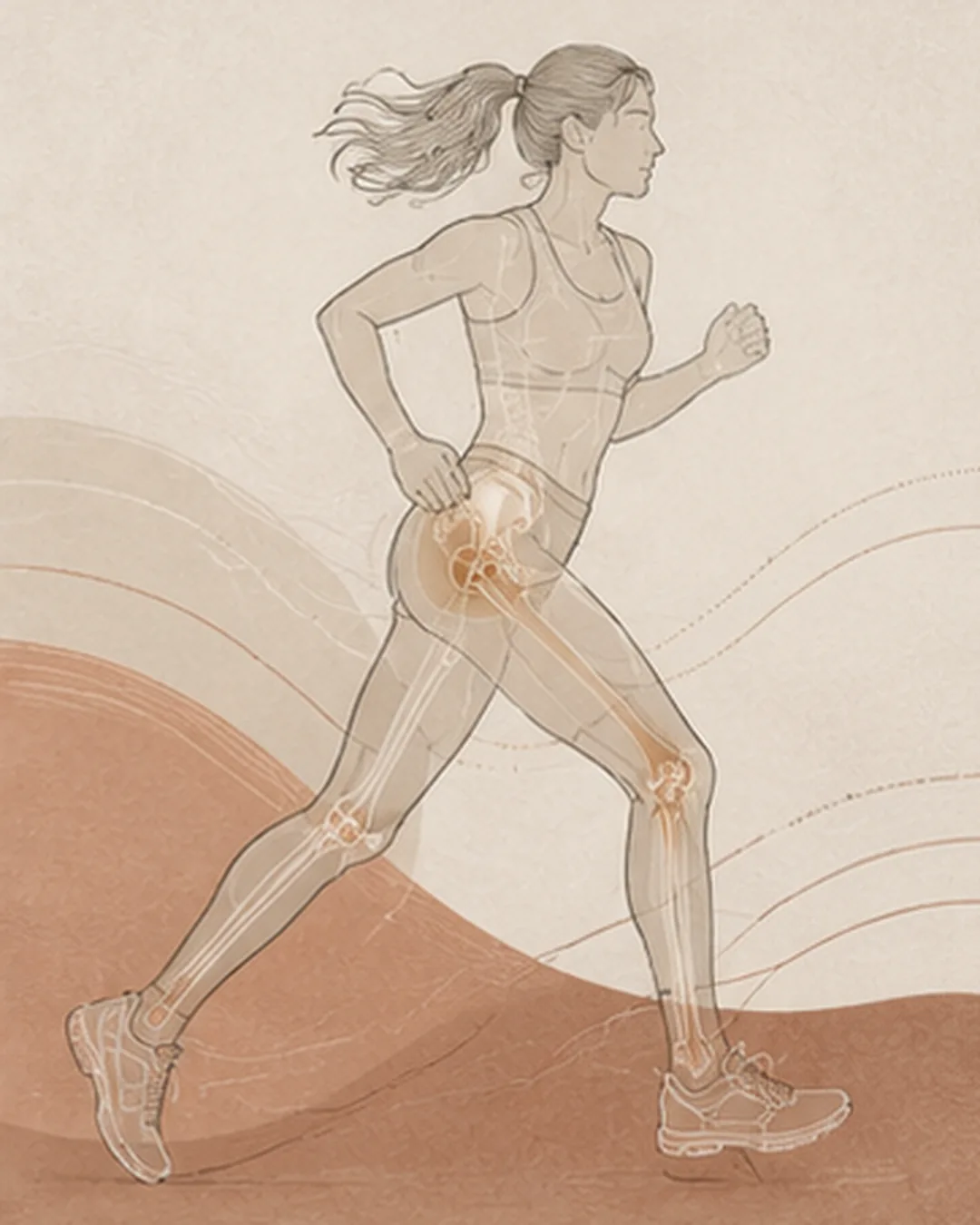
A sharp or burning pain on the outer side of the knee, usually appearing at a consistent point in a run. The IT band is a thick strip of connective tissue that runs from the hip down to the shin. The band itself is not the problem; it is a symptom of the hip and glute on that side not working hard enough, which causes the band to overload at the knee as compensation. Running through it makes it worse. Treating only the knee without addressing the hip does not fix it.
Runner's knee (patellofemoral pain)
An ache behind or around the kneecap, often worse going downstairs or after sitting for a while. Again, the knee is where the pain is, but the hip and glute are almost always part of the picture. Weakness higher up changes how the knee tracks, and the joint pays for it.
Plantar fasciitis
That classic sharp heel pain on the first steps in the morning, or after sitting, that eases into a run and then flares again afterward. The plantar fascia, a thick band of tissue along the underside of the foot, becomes irritated under repeated load. It tends to linger because blood supply to the area is limited, and because most people keep running through the early signs rather than addressing it before it becomes entrenched.
Why rest alone does not work
This is the thing most people do not realise. Rest removes the load that is causing the irritation, so the pain goes. Then you start running again, the same load goes through the same undertrained tissue, and you are back where you started within a few weeks.
The body adapts to the demands placed on it. If you run without doing the strength work that would let your hips, glutes and calves absorb load properly, your joints and connective tissue end up compensating for what the muscles are not doing. That is where overuse injuries come from. The fix is building the capacity, not avoiding the demand.
What osteopathy can help with
There are two distinct jobs that hands-on treatment does in this context, and both matter.
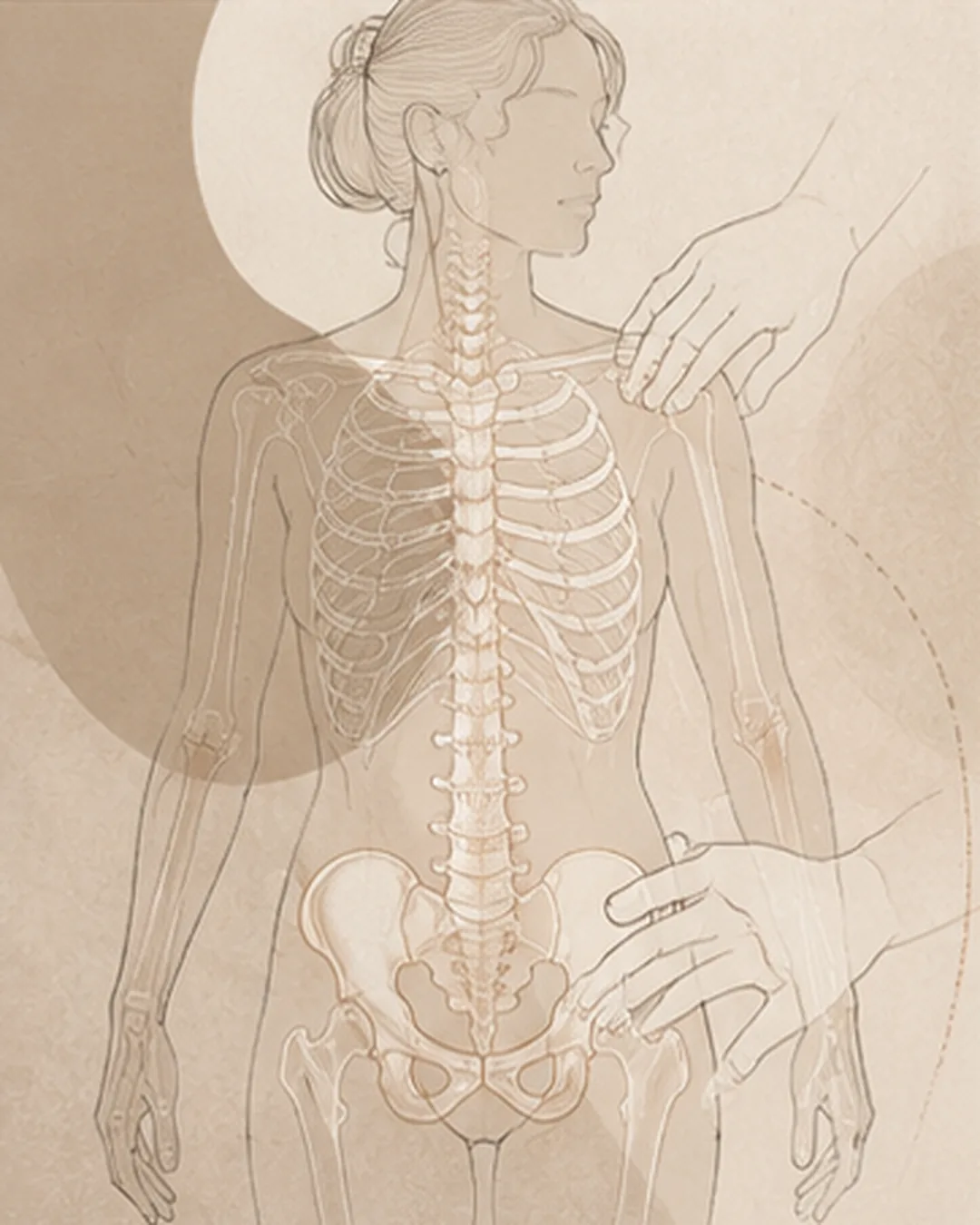
The first is addressing the injury itself. Tight, restricted tissue does not load evenly. If you have a stiff hip, your knee will compensate. If the soft tissue around your shin is overworked and guarded, it will not tolerate load well until that tension is released. Soft tissue work, joint mobilisation and targeted hands-on treatment can calm down the current injury, restore movement and get you to a point where you can load properly again. That is the platform everything else builds on.
The second is the movement assessment. I will look at how you move, not just the painful area. Running injuries almost always have a biomechanical component: something in your gait, your hip stability or your ankle mobility that is feeding the problem. Understanding that means I can give you specific strengthening work that addresses the actual cause rather than just the symptom.
What a sensible return to running looks like
The principle behind all return-to-run programmes is graduated loading: asking slightly more of the body over time, giving it the chance to adapt between sessions, and not jumping ahead because you feel good on a given day.
A useful marker to work with: when you can walk briskly for 30 minutes without any pain, you are likely ready to start a walk-run programme. Not a 5k. Walk-run intervals, where you alternate short running efforts with walking recovery, and build from there over weeks rather than days.
The things that make people break down in the first few weeks back are almost always the same. Too much too soon. No rest days. Skipping the strength work because running feels fine. Comparing their current fitness to where they were before the break.
Your cardiovascular fitness will come back faster than your connective tissue and bone can adapt to the load. That gap is where injuries happen. Keep the volume conservative for longer than feels necessary.
The strength work that actually matters
You do not need a long list of exercises. You need consistent work on a short list of things that address the most common deficits in runners who get hurt.
- Single-leg glute bridges and hip thrusts, building toward single-leg strength that matches both sides
- Single-leg calf raises, slowly and with full range, because calf weakness is a direct driver of shin and achilles problems
- Step-downs from a low step, controlled and single-leg, which load the knee and hip in the way running actually does
- Hip abduction work (clamshells, lateral band walks), particularly relevant for IT band and runner's knee patterns
These are not exciting. They do not feel like running. But done consistently, two or three times a week alongside your running, they build the tissue tolerance that keeps you out of the injury cycle.
When to see someone before starting back
If you are returning after a diagnosed injury, after a long break (more than six months), or if you have had the same injury recur more than once, it is worth getting an assessment before you start your programme rather than after the next flare. It is faster and cheaper than the cycle of rest, hope, re-injury.
See your GP rather than an osteopath if you have any of the following:
- A sharp, localised bone pain that worsens progressively through a run and does not ease quickly afterward (possible stress fracture)
- Sudden swelling or bruising after a specific incident
- Giving way, locking or a feeling that the knee joint is unstable
- Significant swelling that appeared quickly rather than gradually
These need imaging or a more urgent assessment. Everything else, the grinding accumulation of overuse, the recurring shin ache, the knee that grumbles every time you try to build up, that is exactly what an osteopathic assessment is for.
My approach
I came to serious exercise myself after a period of being largely inactive, which gave me a real understanding of what it actually feels like to rebuild from nothing. Running was part of that. I know what it is like to be desperate to get back to it and to keep hitting the same wall.
When I work with someone who is trying to return to running, I want to give them two things. A clear picture of what is driving the injury, not just what hurts. And a plan they can actually follow that gets them running consistently without breaking down. That means honest conversations about what they are ready for and what needs to come first.
Common questions
Can I run through shin splints?
No, not if the pain is present during the run. Continuing to run through shin splints repeatedly is how a stress reaction becomes a stress fracture. Reduce volume, address the load management issues, and build back gradually.
My IT band hurts. Should I stretch it?
Stretching the IT band does very little because it is not a muscle and does not lengthen meaningfully. The more useful work is on hip abductor strength, specifically the glute medius, and reducing running volume until pain settles. Foam rolling the outer thigh can help with short-term comfort but does not address the underlying cause.
How long will it take to get back to running properly?
It depends on the injury and how long it has been going on. For most straightforward overuse injuries, a structured eight-to-twelve-week return-to-run programme alongside the relevant strength work is a realistic timeframe. Injuries that have been ignored for months take longer. Getting assessed earlier is always faster overall.
I had plantar fasciitis two years ago and it's coming back. What should I do?
A recurrence usually means the load management issue that caused it the first time was not fully addressed. Heel pain in the morning that is building again is a sign to act now rather than wait until you cannot run at all. Come in, we will work out what is driving it and get ahead of it.
Last reviewed by Amina Shamsi M.Ost, June 2026
Osteoxfit is based in Chelsea SW10, within easy reach of Kings Road, Sloane Square, Fulham, Kensington and Knightsbridge. I work exclusively with women. No GP referral needed. This article is general information, not personal medical advice. If you have had a sudden injury or suspect a fracture, see your GP or attend A&E.
Tired of the same injury?
If you want to get back to running and actually stay there, get in touch. I will give you an honest assessment and a plan that deals with the cause, not just the pain.
Message on WhatsApp