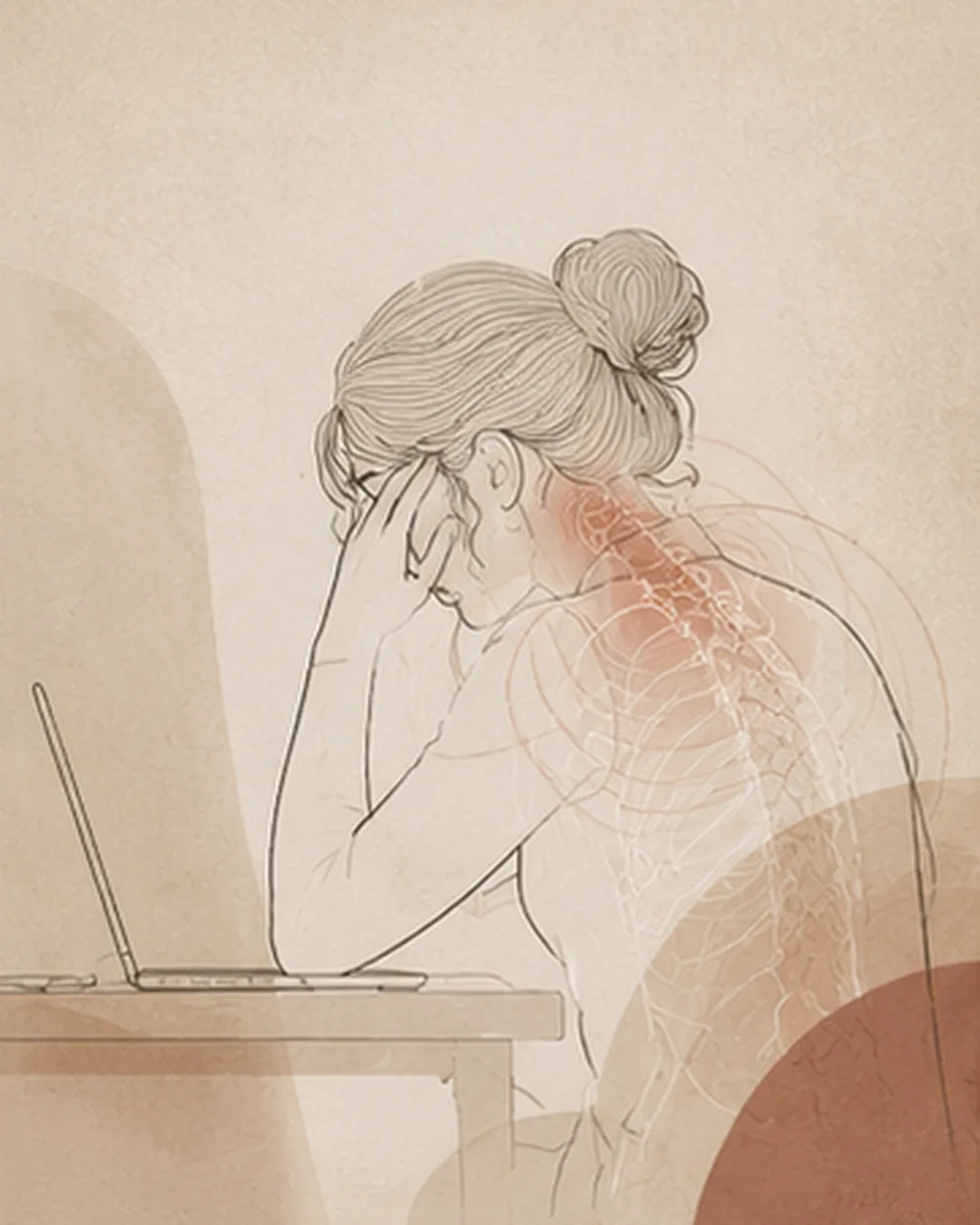
Desk work can aggravate back pain, but the problem is rarely one “bad posture”. Long uninterrupted time, a mismatched workstation, stress, sleep and reduced activity can all contribute. Begin by changing exposure: bring equipment within reach, vary supported positions and take brief movement breaks.
First changes
Set the keyboard near relaxed elbow height, support the feet and bring the main screen ahead. Use the backrest, but do not force yourself rigidly upright. Alternate sitting, standing and walking before discomfort escalates.
Activity
Continue normal activity where possible. Short walks and gradually progressed strength work are usually more useful than prolonged rest. Modify duration and range rather than abandoning movement entirely.
A seven-day desk experiment
Change one variable at a time so you can tell what helps. On days one and two, set a timer to move for two or three minutes every 30–45 minutes. Then adjust screen and keyboard position, followed by foot support and chair depth. Record work tolerance rather than chasing a perfect pain score. A costly chair cannot compensate for an uninterrupted ten-hour working day.
Laptop-only work is a common compromise: raising the screen also raises the keyboard. For longer sessions, use a separate keyboard and mouse. When calls do not require a screen, standing or walking can add variety without turning the entire day into a workout.
Match the change to the problem
If symptoms build only during long calls, movement breaks may be the highest-value change. If they begin immediately when typing, examine keyboard reach, screen position and whether the chair supports the task. If pain also limits walking, sleep or ordinary activity away from the desk, a workstation purchase alone is less likely to answer the whole problem. This distinction prevents repeated spending on chairs and accessories without a clear hypothesis.
When an assessment helps
Consider an assessment when pain is worsening, recurring, restricting work or not settling. A clinician should take a history, screen for concerning features and agree a plan rather than simply identify a posture fault.
Local context
Osteoxfit provides women-only osteopathy and rehabilitation in Chelsea SW10, accessible from Fulham, Kensington, South Kensington, Kings Road and Sloane Square. Location should make care practical, not determine clinical advice.
Urgent help
Seek urgent medical advice for new bladder or bowel changes, numbness around the saddle area, major weakness, serious trauma, fever or feeling very unwell. Use NHS 111 or emergency services according to severity.
Final answer
Improve the workstation, but also vary time, movement and workload. Persistent desk-related pain deserves an individual assessment rather than an endless search for the perfect chair.
Frequently asked questions
Is sitting the cause?
It may aggravate symptoms, but back pain is multifactorial.
Should I stand all day?
No. Prolonged standing can also be uncomfortable.
Can osteopathy help?
An osteopath can assess, advise and provide a management plan within their scope; outcomes and suitability vary.
If desk-related pain keeps returning or is limiting work, learn about back-pain osteopathy at Osteoxfit, or read when back pain needs assessment. Osteoxfit is a women-only clinic in Chelsea; booking is not a substitute for urgent NHS care.
Ready to get started?
Message Amina on WhatsApp to check availability and request an appointment.
Message on WhatsApp